
Bits & Bytes: The IT Chronicles
How Can Healthcare Organizations Maximize ROI From AI Investments?
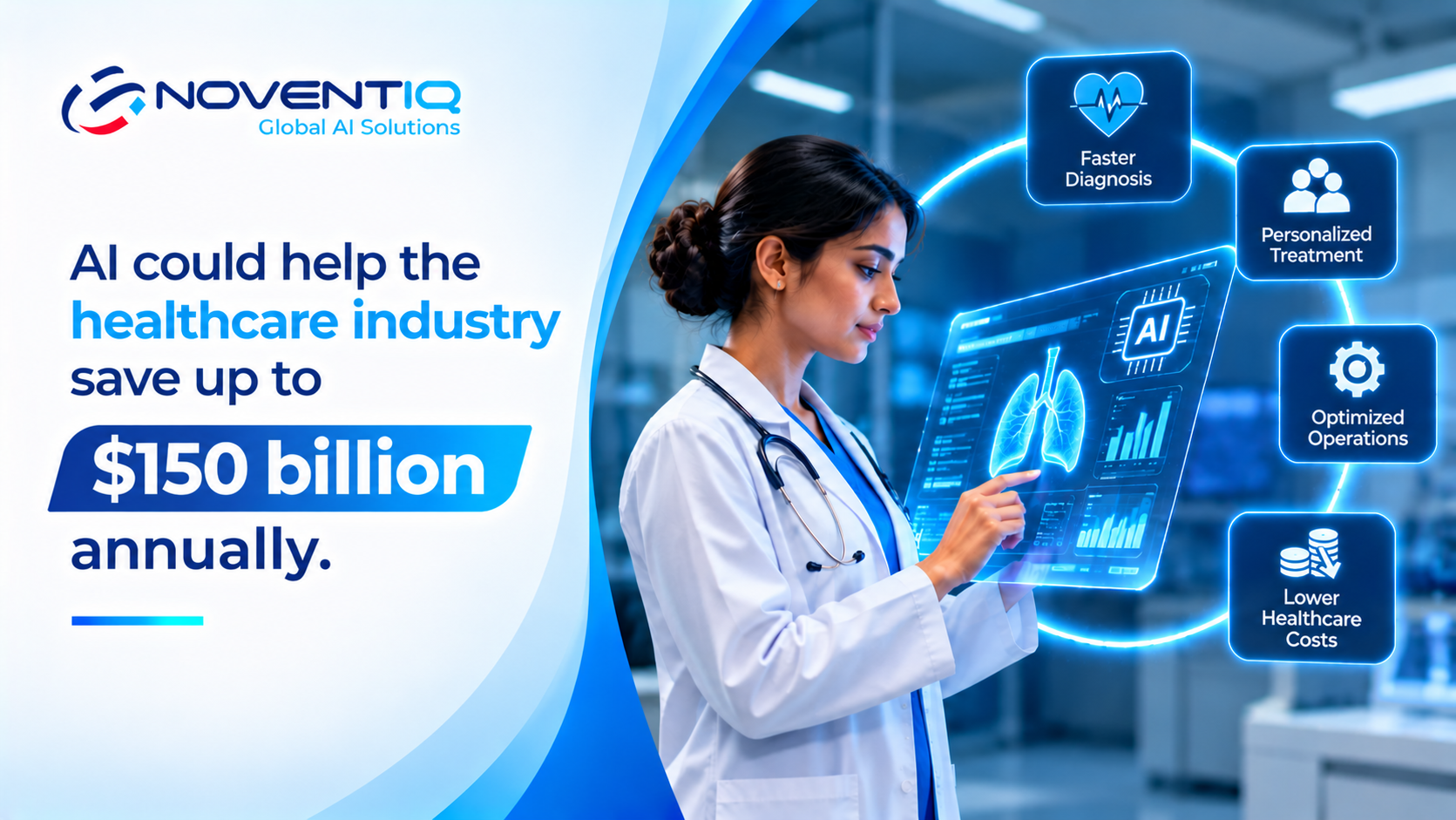
“According to Accenture, AI applications could help the healthcare industry save up to $150 billion annually, through improved clinical outcomes, streamlined operations, and greater productivity across the healthcare ecosystem.”
Healthcare leaders don’t need another statistic proving AI’s potential.
What they need is clarity on where that value comes from and why so many AI initiatives struggle to deliver it.
Across the industry, organizations are investing heavily in AI to improve patient outcomes, streamline operations, accelerate research, and reduce costs. Yet, many still find themselves stuck in pilot programs, isolated use cases, or solutions that never scale beyond a single department.
The problem isn’t a lack of AI.
It’s a lack of enterprise readiness.
Healthcare organizations that are realizing measurable returns aren’t simply deploying AI faster, they’re building the right ecosystem for AI to create sustained business value.
ROI Doesn't Begin with AI. It Begins With The Right Foundation.
A common misconception is that AI alone drives transformation.
In reality, AI is only as effective as the data it can access, the systems it can integrate with, and the infrastructure supporting it.
Healthcare organizations generate enormous volumes of information every day, from Electronic Health Records (EHRs) and diagnostic imaging to laboratory systems, insurance claims, IoT devices, clinical notes, patient interactions, and research databases.
However, much of this information remains siloed across disconnected systems.
Without integrated and governed data, even the most advanced AI models deliver fragmented insights.
Organizations achieving the highest ROI first invest in creating a connected digital foundation where data flows securely across departments, enterprise applications communicate seamlessly, and governance ensures trust, compliance, and scalability.
Only then can AI deliver intelligence across the entire healthcare ecosystem.
Where AI Is Delivering The Highest Returns
While AI is often associated with diagnosis, the biggest returns are being generated across multiple functions that collectively improve efficiency, reduce costs, and enhance patient care.
Administrative Operations
Administrative processes remain one of healthcare’s largest cost centers.
From appointment scheduling and patient onboarding to coding, billing, documentation, and claims processing, repetitive workflows consume valuable clinician and staff time.
AI-powered automation streamlines these activities, reducing manual effort while improving operational efficiency. Healthcare professionals spend less time on paperwork and more time delivering patient care, resulting in measurable productivity gains and lower administrative costs.
Clinical Decision Support
Healthcare professionals are expected to make critical decisions using information spread across multiple systems.
Enterprise AI helps consolidate patient histories, summarize medical records, surface relevant clinical insights, and support evidence-based decision-making.
Rather than replacing clinicians, AI enables faster access to the information they need, helping improve decision quality while reducing cognitive burden.
Medical Imaging
Radiology departments continue to be among the strongest adopters of AI.
AI assists specialists by identifying abnormalities, prioritizing urgent cases, and supporting image interpretation.
This enables radiologists to focus on complex clinical decisions while improving diagnostic efficiency and reducing reporting turnaround times.
Personalized Patient Experiences
Today’s patients expect healthcare experiences that are proactive, connected, and personalized.
AI enables intelligent appointment reminders, multilingual virtual assistants, medication adherence support, and personalized patient communication.
The result is improved patient engagement, reduced missed appointments, and stronger continuity of care, while easing pressure on healthcare staff.
Research And Drug Discovery
Life sciences organizations are increasingly using AI to accelerate research, analyze scientific literature, identify drug candidates, and optimize clinical trials.
Combined with advanced analytics, AI helps shorten research cycles while enabling researchers to make faster, data-driven decisions.
Why Many Healthcare AI Investments Fall Short
Organizations often believe that implementing AI is the most challenging part of transformation.
In reality, implementation is only one step.
The larger challenge lies in creating an enterprise environment where AI can consistently deliver value.
Many AI initiatives fail because of:
- Fragmented patient data across multiple systems
- Legacy applications that restrict integration
- Poor data quality and inconsistent governance
- Standalone AI pilots without an enterprise roadmap
- Limited collaboration between clinical, operational, and technology teams
When these challenges remain unresolved, AI delivers isolated improvements instead of enterprise-wide transformation.
Healthcare leaders are increasingly recognizing that AI should be treated as a long-term business capability, not a one-time technology initiative.
Moving Beyond AI Pilots
Most healthcare organizations have already experimented with AI.
Far fewer have successfully scaled it.
The difference rarely lies in the AI model they selected.
It lies in the ecosystem supporting that model.
Organizations maximizing AI ROI invest in:
- Secure cloud infrastructure
- Unified and governed healthcare data
- Connected enterprise applications
- Modern analytics platforms
- Responsible AI governance
- Continuous monitoring and optimization
These capabilities enable AI to move beyond isolated use cases and become embedded in everyday clinical and operational workflows.
The Future Of Healthcare ROI Will Be Measured In Intelligence
Healthcare has always been driven by expertise.
The next generation of healthcare organizations will combine that expertise with intelligent systems capable of delivering faster decisions, improving operational efficiency, accelerating innovation, and enhancing patient outcomes.
The organizations realizing the greatest return on AI investments won’t necessarily deploy the most AI.
They’ll build the strongest digital foundation to support it.
The question healthcare leaders should now ask isn’t:
“Should we invest in AI?”
It’s:
“Are we building the cloud, data, applications, and governance required to maximize every AI investment?”
Partner with Noventiq Global AI Solutions
At Noventiq Global AI Solutions, we help healthcare organizations move beyond AI experimentation by building the digital foundations required for enterprise-scale transformation.
From cloud implementation and Azure Managed Services to application engineering, secure data platforms, analytics, and enterprise AI solutions, we help healthcare providers and life sciences organizations maximize the value of every AI investment.
Whether you’re modernizing healthcare applications, integrating enterprise data, implementing AI, or scaling existing initiatives, our experts help transform vision into measurable outcomes.
Ready to maximize the ROI of your AI investments?
🌐 Website: www.noventiqai.com
📩 Email: contact.us@noventiqai.com